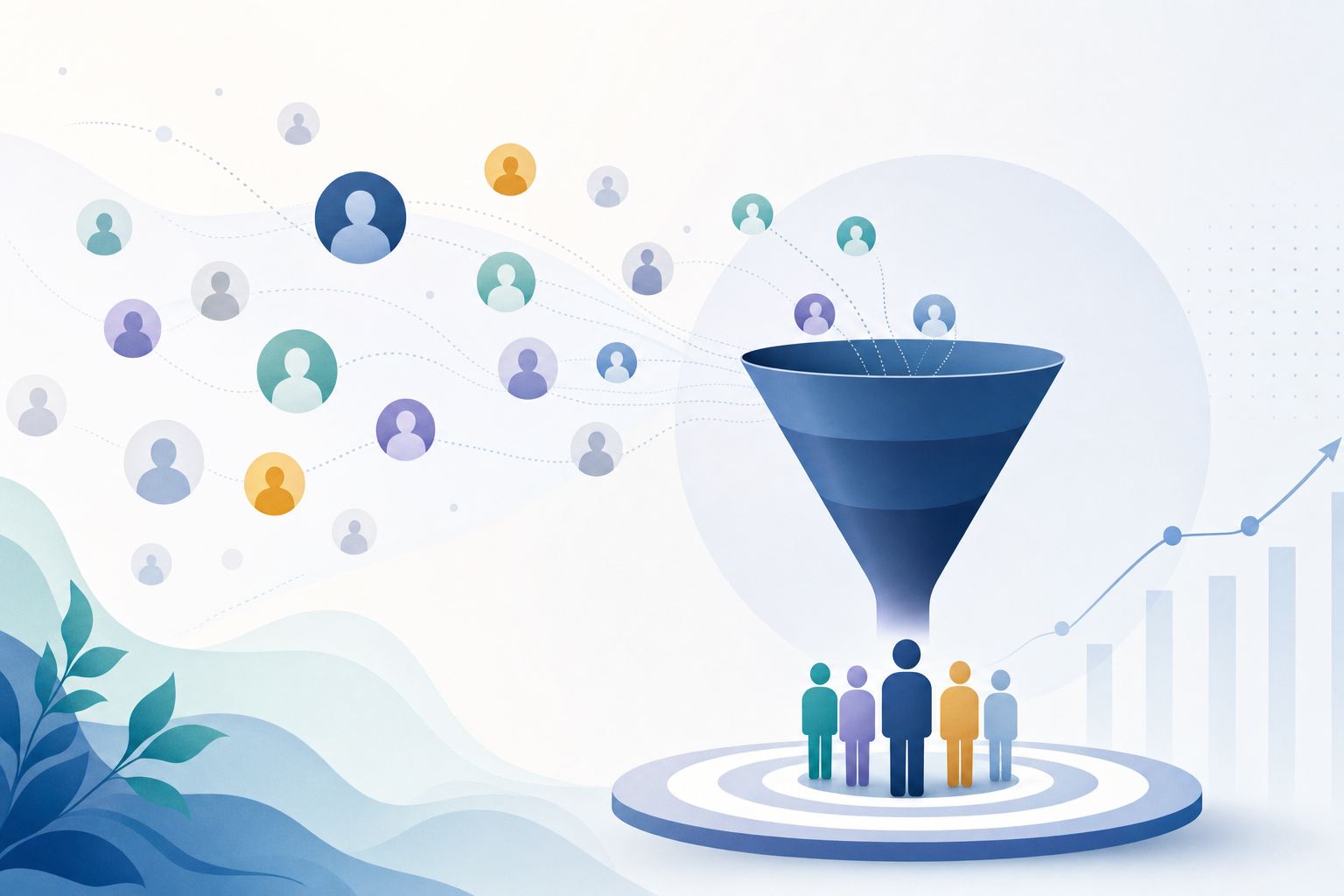
Lead generation is the process of attracting and converting strangers and prospects into people who have indicated interest in your company's product or service. A "lead" is anyone who has shared their contact information or expressed interest - by filling out a form, subscribing to a newsletter, requesting a demo, or engaging with your content. Lead generation is the bridge between marketing (creating awareness) and sales (closing deals).
Without a reliable lead generation system, your business depends on luck and sporadic referrals. With one, you have a predictable pipeline of potential customers that you can nurture and convert into revenue. This guide covers every aspect of lead generation - from defining lead types to building a complete lead generation machine.
What Is a Lead?
A lead is a person or company that has shown interest in what you offer. But not all leads are equal. Understanding the spectrum of lead quality is essential for efficient resource allocation:
Marketing Qualified Lead (MQL)
An MQL is a lead that has engaged with your marketing content enough to indicate interest but is not yet ready for direct sales outreach. Examples: downloaded a white paper, attended a webinar, subscribed to your newsletter, visited your pricing page multiple times. MQLs need further nurturing before they are ready to buy.
Sales Qualified Lead (SQL)
An SQL is a lead that has been vetted and determined to be ready for direct sales engagement. They have a clear need, budget, authority to purchase, and timeline. SQLs are passed from marketing to sales for direct outreach. The MQL-to-SQL conversion is one of the most important metrics in lead generation.
Product Qualified Lead (PQL)
A PQL is a lead who has used your product (through a free trial or freemium plan) and taken actions that indicate buying intent. For example, a Slack team that has sent 2,000+ messages and added 10+ members is a strong PQL. PQLs are common in product-led growth companies.
Inbound Lead Generation
Inbound lead generation attracts prospects to you through valuable content and experiences:
Content Marketing
Publishing blog posts, guides, videos, and podcasts that answer questions your target audience is asking. Content drives organic traffic from search engines and builds trust. When visitors find your content helpful, they are more likely to engage further and become leads. See our complete guide to content marketing strategy for details.
SEO (Search Engine Optimization)
Optimizing your website and content to rank in Google for terms your potential customers search. SEO-driven leads are among the highest quality because the prospect is actively looking for a solution. Target both informational queries ("how to improve email deliverability") and transactional queries ("best email marketing tool for small business").
Social Media
Building an audience on platforms where your target customers are active. LinkedIn is dominant for B2B lead generation. Instagram and TikTok work well for B2C and D2C brands. The key is providing value (education, entertainment, inspiration) rather than just promoting your product.
Webinars and Live Events
Hosting educational events that attract your target audience. Webinars are particularly effective for B2B lead generation because they demonstrate expertise and allow real-time interaction. Attendees who stay for the full session and ask questions are high-quality leads.
Outbound Lead Generation
Outbound lead generation involves proactively reaching out to potential customers:
Cold Email
Sending personalized emails to prospects who have not previously interacted with your business. Effective cold email is highly personalized, value-driven, and concise. Response rates for well-crafted cold emails typically range from 5-15%. See our detailed guide on cold outreach best practices for frameworks and templates.
Cold Calling
Phone-based outreach to prospects. While often considered outdated, cold calling remains effective in certain B2B segments - particularly for mid-market and enterprise sales where phone conversations can quickly qualify opportunities.
LinkedIn Outreach
Connecting with and messaging prospects on LinkedIn. This works especially well for B2B because LinkedIn provides rich professional context. The most effective approach: engage with their content first, send a personalized connection request, and provide value before pitching.
Lead Magnets
A lead magnet is a valuable resource offered in exchange for a prospect's contact information (usually an email address). Effective lead magnets:
- Solve a specific, immediate problem
- Deliver value quickly (consumable in 5-15 minutes)
- Demonstrate your expertise
- Naturally lead toward your paid product or service
Common lead magnet types:
| Type | Best For | Example |
|---|
| Templates and swipe files | Time-pressed professionals | "10 High-Converting Email Subject Lines" |
| Checklists | Process-oriented audiences | "The Complete Product Launch Checklist" |
| Ebooks and guides | Education-seeking audiences | "The Ultimate Guide to Remote Team Management" |
| Calculators and tools | Data-driven decision makers | "ROI Calculator for Marketing Automation" |
| Free trials / demos | Ready-to-evaluate prospects | "Start Your 14-Day Free Trial" |
| Webinar recordings | Engaged learners | "Watch: How We Grew from $0 to $1M ARR" |
Lead Scoring
Lead scoring assigns numerical values to leads based on their characteristics and behaviors to prioritize sales outreach. A simple scoring model might include:
- Demographic fit (+): Job title matches ICP (+10), company size matches (+5), industry matches (+5)
- Behavioral signals (+): Visited pricing page (+15), downloaded case study (+10), attended webinar (+10), opened 5+ emails (+5)
- Negative signals (-): Student email (-10), unsubscribed from emails (-20), no engagement in 30 days (-5)
Leads that reach a threshold score (e.g., 50 points) are flagged as SQLs and passed to sales. This ensures your sales team focuses on the most promising opportunities.
Lead Nurturing
Most leads are not ready to buy immediately. Lead nurturing is the process of building relationships with leads over time through targeted content and communication until they are ready to purchase. A typical nurture sequence might look like:
- Day 0: Welcome email + deliver the lead magnet
- Day 2: Educational email - a helpful tip related to their pain point
- Day 5: Case study or success story - social proof
- Day 8: Deeper educational content - position yourself as expert
- Day 12: Soft pitch - introduce your solution as one approach
- Day 15: Direct CTA - invite to demo, free trial, or sales call
This sequence connects to your broader marketing funnel - nurturing moves leads from MOFU to BOFU over time.
Building a Lead Generation Machine
A "lead gen machine" is a system that reliably generates qualified leads on an ongoing basis. Here is how to build one:
- Define your Ideal Customer Profile (ICP): Who is your best customer? What industry, company size, role, and pain points define them?
- Create a lead magnet: Build one high-quality resource that your ICP would find immediately valuable.
- Set up the capture mechanism: Landing page with a form, connected to your email marketing tool.
- Drive traffic: Use a mix of content marketing (long-term), social media (medium-term), and paid ads (immediate) to send visitors to your lead magnet.
- Nurture with email sequences: Automated emails that build trust and guide leads toward a purchase decision.
- Score and qualify: Use lead scoring to identify the hottest leads for sales outreach.
- Close: Sales team engages qualified leads with demos, proposals, and personalized outreach.
- Measure and optimize: Track conversion rates at every step and continuously improve.
Understanding your customer acquisition costs at each stage helps you optimize spending and maximize ROI.
Key Takeaways
- A lead is anyone who has expressed interest - but MQLs, SQLs, and PQLs represent different levels of readiness.
- Inbound lead generation (content, SEO, social) builds long-term leverage; outbound (cold email, calling, LinkedIn) generates immediate pipeline.
- Lead magnets convert visitors to leads by offering immediate value in exchange for contact information.
- Lead scoring prioritizes the hottest leads for sales, ensuring your team focuses on the highest-probability opportunities.
- Nurture sequences build trust over time, moving leads through your funnel until they are ready to buy.
- A lead generation machine combines ICP definition, lead magnets, traffic, nurturing, scoring, and sales into a repeatable system.
Frequently Asked Questions
How many leads do I need to generate?
Work backwards from your revenue goal. If you need $10K/month in new revenue, your average deal is $1K, and your close rate is 25%, you need 40 qualified leads per month. If 10% of all leads become qualified, you need 400 total leads. This math varies by business but the principle is the same: start with revenue targets and reverse-engineer lead volume.
What is the best lead generation channel?
The best channel is the one where your target customers are most active and where you can reach them cost-effectively. For B2B SaaS, LinkedIn and content marketing are often strongest. For B2C, social media ads and influencer marketing may work better. Test multiple channels and measure CAC and lead quality for each.
How do I improve lead quality?
Improve lead quality by narrowing your targeting (more specific audience, more specific content, more specific lead magnets), implementing lead scoring, and adding qualification questions to your forms. Better content that speaks directly to your ICP naturally attracts better leads. Quality almost always trumps quantity.
Should I buy lead lists?
Generally, no. Purchased lead lists have low accuracy, poor engagement rates, and can damage your email sender reputation. Instead, build your list organically through content marketing and lead magnets. If you need outbound data, use research tools like Apollo, ZoomInfo, or LinkedIn Sales Navigator to build targeted prospect lists - but always personalize your outreach.
What is the difference between lead generation and demand generation?
Lead generation focuses on capturing contact information from interested prospects. Demand generation is broader - it creates awareness and interest in your solution category before people are ready to provide their information. Demand generation feeds lead generation. Strong demand generation makes lead generation easier because prospects are already educated and interested when they encounter your lead capture mechanisms.