Hyper-Personalization with Machine Learning: Why It Wins
Machine learning models let you deliver product features tailored to each user's unique preferences, habits, and behaviors-no more generic, one-size-fits-all experiences. Instead of segmenting users with static rules or simple demographics, you can create one-to-one recommendations, nudges, and content that anticipate exactly what your users want, when they want it.
Modern consumers expect brands to know their tastes, predict their needs, and surprise them with relevant suggestions at every touchpoint. Companies like Booking.com and Amazon have set the bar sky-high by using ML-powered personalization to delight users and boost their KPIs Personalization Using Machine Learning. If you want your product to stand out, you need to build the same intelligence into your offering.
What Is Hyper-Personalization?
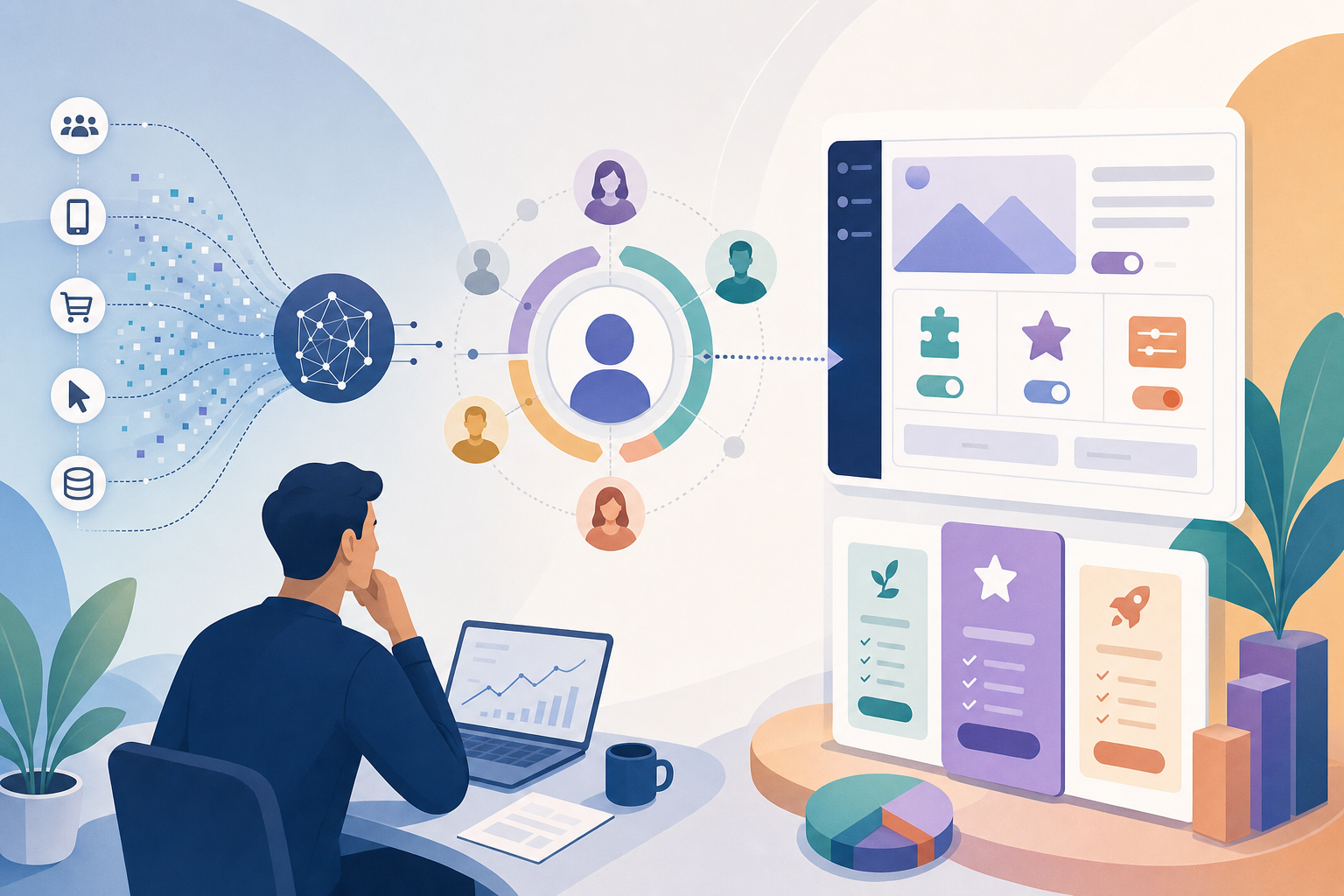
Hyper-personalization is delivering individualized experiences by analyzing vast amounts of data and making real-time decisions for every user. Machine learning makes this possible by continuously learning from user interactions and optimizing recommendations or features-even as tastes and contexts change.
Where traditional personalization might recommend a "Top 10" list to a segment, hyper-personalization builds a "Top 1" just for you, based on your real-time behavior, social context, and even visual preferences AI Personalization | IBM.
Why Machine Learning Beats Rule-Based Personalization
Rule-based personalization is simple but brittle. It struggles when user preferences change, when new products are added, or when your audience becomes more diverse. Machine learning, by contrast, adapts on the fly-identifying subtle patterns and responding to micro-shifts in behavior or context.
With ML, you can automate the heavy lifting: data gathering, pattern recognition, and the delivery of tailored content-at scale, in real time. This scalability is a game-changer for fast-growing startups and established enterprises alike Using Machine Learning To Personalize Shopping Experiences.
Common Use Cases: From Recommendations to Visual Customization
- Product Recommendations: Suggest the right items to buy, watch, or read, personalized for each user.
- Dynamic Pricing: Adjust prices based on browsing history, purchase intent, or user loyalty.
- Personalized Search: Re-rank results based on individual tastes or likely intent.
- Visual Personalization: Show product images that match a user's style or preferences, as seen in fashion and home decor apps.
- Content Tailoring: Serve articles, videos, or tutorials that match a user’s skill level and interests.
- Onboarding Flows: Adjust onboarding steps based on predicted user goals or behaviors.
Step-by-Step: Implementing ML-Powered Personalization
You don’t need a PhD or a giant data science team to start. Here’s a proven approach, broken into explicit steps:
-
Define Your Personalization Goals
Start by pinpointing which product experience you want to personalize and why. Is your goal to increase engagement, retention, conversion, or average order value? For instance, Booking.com focused on improving recommendations to match each traveler's unique needs Personalization Using Machine Learning. -
Map Your Data Sources
List out every source of data you have or can acquire-user profiles, clickstreams, purchase history, ratings, social behaviors, contextual data (location, device), and so on. ML thrives on rich, diverse data sets. -
Choose the Right ML Model
For recommendations, collaborative filtering (finding users with similar tastes) is a proven classic. For new users, content-based filtering or hybrid models perform well. More advanced techniques like neural collaborative filtering, decision trees, or even deep learning models can take you further if you have the data and resources. -
Build a Data Pipeline
You need to collect, clean, and preprocess your data reliably. Automate data flows from your app or site to your ML infrastructure. Tools like Apache Airflow, Fivetran, or even basic ETL scripts get the job done. -
Train and Evaluate Your Model
Use historical data to train, then validate on a holdout set. Track core metrics: precision, recall, lift, or business KPIs like click-through rate or revenue per user. Iterate fast: small improvements compound. -
Deploy and Integrate with Your Product
Integrate your trained model with your app or platform via APIs, SDKs, or batch updates. Ensure the user experience is smooth: recommendations should feel instantaneous and relevant, not delayed or random. -
Monitor and Improve Continuously
ML models need constant feedback. Monitor performance, gather user feedback, and retrain as new data comes in. Create feedback loops: thumbs up/down, ratings, or explicit user actions help you refine accuracy.