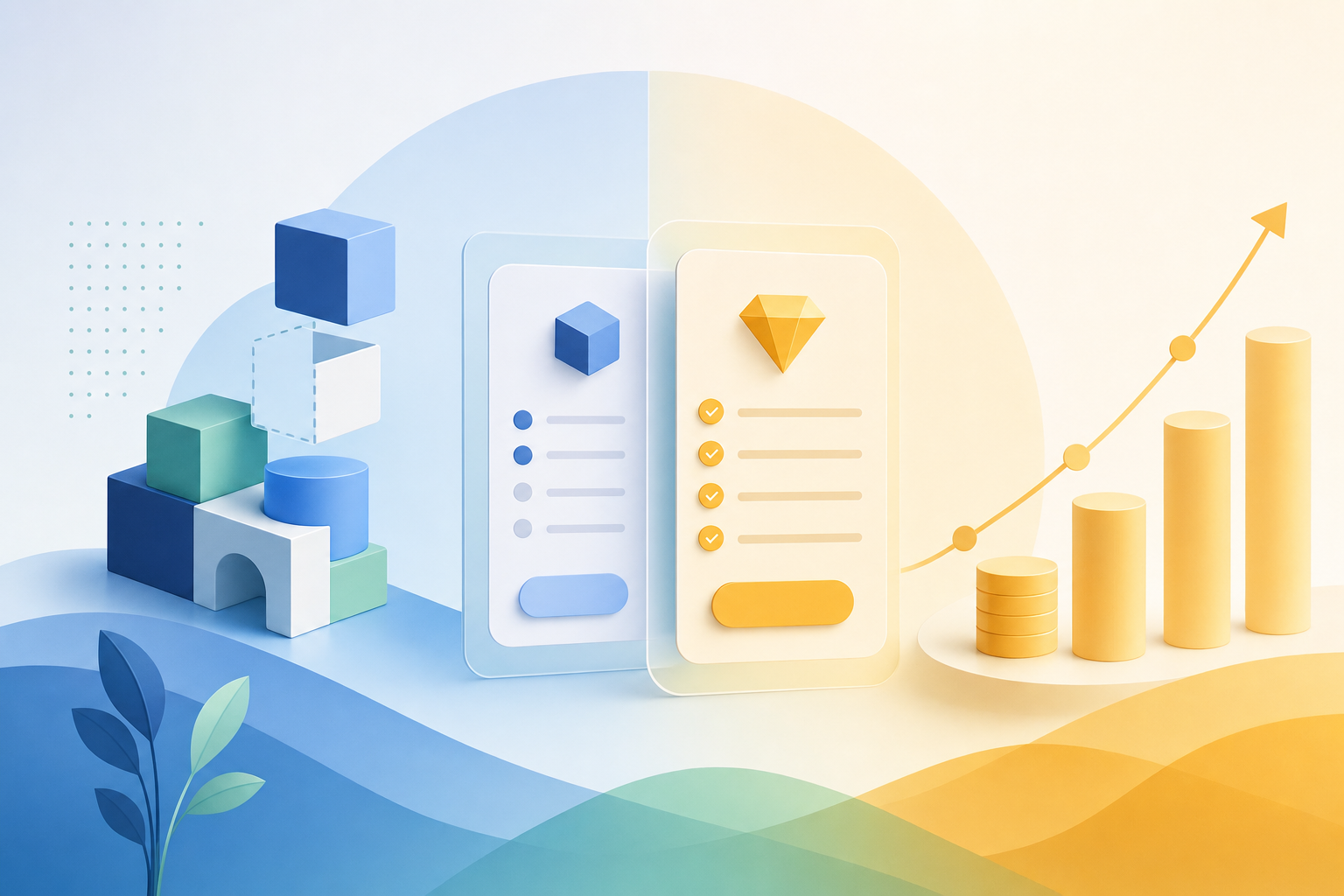
A freemium model is a business pricing strategy where a basic version of a product or service is offered for free, while advanced features, greater capacity, or enhanced support are available through paid plans. The word "freemium" combines "free" and "premium." The free tier serves as a customer acquisition tool, and the business monetizes the small percentage of users who upgrade to paid plans - typically 2-5% of the total user base.
Freemium has become the dominant model for SaaS companies, mobile apps, and digital platforms. But it is not right for every business. This guide explains how freemium works, when it makes sense, how to design an effective free tier, and the pitfalls that cause most freemium businesses to fail.
Freemium vs. Free Trial: Understanding the Difference
These terms are often confused, but they work very differently:
| Aspect | Freemium | Free Trial |
|---|
| Duration | Free forever (with limitations) | Time-limited (7, 14, or 30 days) |
| Access | Limited features or capacity | Full product access |
| Goal | Build habit and demonstrate value over time | Create urgency to convert quickly |
| Best for | Products with network effects or viral growth | Complex products where full experience is needed |
| Risk | Free users may never convert | Users may not fully evaluate in the trial window |
Hybrid approach: Some companies offer freemium with a free trial of premium features. Slack, for example, is freemium (free forever with limits) but also gives teams a trial of paid features to encourage upgrades.
The Economics of Freemium
Freemium works on volume. If 3% of free users convert to a $20/month plan, you need 10,000 free users to generate $6,000/month in revenue. The math demands either:
- Very low cost to serve free users - software with near-zero marginal cost is ideal
- Very high volume - your product needs viral or organic growth to acquire enough free users
- High lifetime value (LTV) - when paid users stick around and/or pay a lot, you can afford low conversion rates
The freemium math: Revenue = Free Users × Conversion Rate × Average Revenue Per Paid User (ARPU)
Understanding these economics in the context of your overall pricing strategy is essential before committing to freemium.
How to Design the Free Tier
The free tier is the most important design decision in a freemium model. Get it wrong and you either give away too much (no reason to upgrade) or too little (no one uses the free product).
Feature Gating
Limit access to specific features based on plan level. Free users get core functionality; paid users get advanced features.
- Canva: Free users can design but cannot access premium templates, brand kits, or background removal.
- Zoom: Free users get unlimited 1-on-1 calls but group meetings are limited to 40 minutes.
Usage Limits
Allow access to all features but cap usage volume.
- Mailchimp: Free up to 500 contacts, then requires a paid plan.
- Dropbox: Free with 2GB storage; paid for more space.
Capacity Limits
Restrict the number of users, projects, or workspaces.
- Slack: Free workspace has limited message history and no guest access.
- Notion: Free for individual use; team features require paid plans.
The Golden Rule of Free Tier Design
The free tier should deliver enough value that users become dependent on the product, but leave enough unmet needs that upgrading feels like an obvious next step. Users should hit the free tier's limitations naturally as they get more value from the product - this is the ideal conversion trigger.
Real-World Freemium Examples
Spotify
Free tier includes all music with ads and no offline playback. Premium ($10.99/month) removes ads and enables downloads. The free tier builds listening habits; the ad interruptions create friction that drives upgrades. Spotify converts approximately 44% of users to paid - far above the industry average - because the free experience is good enough to build habits but frustrating enough to drive upgrades.
Slack
Free tier limits searchable message history to 90 days and restricts integrations. As teams grow and history becomes valuable, upgrading becomes essential. Slack's freemium model generated massive enterprise adoption because IT departments did not need to approve a free tool - teams adopted it organically.
Dropbox
Free tier offers 2GB storage. Users who store important files quickly need more space. Dropbox also pioneered referral-driven freemium - users could earn more free storage by referring friends, creating a viral growth loop.
Canva
Free tier includes thousands of templates and basic design tools. Premium unlocks the brand kit, background remover, premium stock photos, and team features. Users start with free, discover they need premium features for professional work, and upgrade.
When Freemium Works
Freemium is ideal when:
- Your product has near-zero marginal cost per additional free user (software, digital products)
- Your product has network effects - more users make the product more valuable (Slack, social platforms)
- The product naturally grows within organizations - one user adopts, then invites the team
- You can reach a large total addressable market - freemium needs volume to work
- The value of your product increases over time - users become more dependent the more they use it
- Your business model supports low conversion rates with high LTV
When Freemium Fails
Freemium is a poor fit when:
- Cost to serve is high: If each free user costs you significant money (bandwidth, support, storage), free users become an unsustainable expense.
- Small addressable market: If your target market is 5,000 companies, you cannot afford 97% of them using your product for free.
- Complex products requiring onboarding: If the product needs significant setup, training, or customization, free users consume support resources without generating revenue.
- Service-based businesses: Freemium does not work when each "unit" of delivery requires human labor.
Common Freemium Pitfalls
- Giving away too much: If the free tier satisfies most users' needs, they have no incentive to upgrade. The classic mistake is making the free version "too good."
- Giving away too little: If the free tier does not deliver real value, users churn before reaching the upgrade trigger. The free product must solve a real problem.
- No clear upgrade trigger: Users need to naturally encounter the free tier's limitations. If the limitation is arbitrary (like a watermark), it feels punitive. If it is natural (running out of storage, needing team features), it feels like a logical next step.
- Ignoring free user support costs: Free users still contact support. Without self-serve documentation, knowledge bases, and community forums, support costs can overwhelm the business.
- No viral loop: Freemium without virality means you are paying to acquire users who may never pay. Build sharing, collaboration, and referral mechanics into the free product.
For a broader view of pricing approaches beyond freemium, explore our complete guide to pricing strategies. If you are building a software product specifically, our guide on SaaS businesses covers how freemium fits into the SaaS model.
Key Takeaways
- Freemium offers a free product tier to acquire users at scale, monetizing through paid upgrades with typical 2-5% conversion rates.
- The free tier must deliver real value (to build habits) but leave enough unmet needs (to drive upgrades).
- Freemium works best for software products with near-zero marginal cost, network effects, and large addressable markets.
- Feature gating, usage limits, and capacity limits are the three main approaches to designing the free tier.
- Freemium fails when cost to serve is high, the market is small, or the free tier is too generous or too restrictive.
Frequently Asked Questions
What is a good freemium conversion rate?
Industry benchmarks typically range from 2-5% for most SaaS and digital products. Top performers like Spotify achieve much higher rates (around 44%), but these are exceptions. A 3% conversion rate is considered healthy. Focus on increasing conversion rate through better upgrade triggers, clear value demonstration, and reducing friction in the upgrade process.
Should I start with freemium or add it later?
Most experts recommend starting with a paid product and adding a free tier later - once you have validated demand, understand your unit economics, and can afford to serve free users. Starting with freemium risks acquiring thousands of free users before you know if anyone will pay. Validate willingness to pay first, then use freemium to scale.
How do I prevent free users from staying free forever?
Design natural upgrade triggers that users encounter as they get more value from the product. As their usage grows (more storage, more team members, more advanced needs), they should organically hit the free tier limits. Combine this with targeted email campaigns that highlight premium features when users approach their limits.
Is freemium the same as a free trial?
No. Freemium gives permanent free access to a limited version of the product. A free trial gives temporary access to the full product (typically 7-30 days). They serve different purposes: freemium builds long-term habits with low-commitment entry, while free trials create urgency to evaluate and commit. Some companies use both simultaneously.
Can freemium work for physical products?
Rarely, because physical products have meaningful marginal costs. However, some companies use a freemium-adjacent model: Gillette famously gave away razors and sold blades. Printers are sold cheaply while ink cartridges are expensive. These are not true freemium but share the logic of low-cost entry leading to ongoing revenue.